Save your family’s stories, photos, voices and recipes before they are lost — and pass them on, so the grandchildren know where they came from.
181-page PDF · 11 printable worksheets · instant download
Every family has them: the stories only your mother still tells, a shoebox of photos nobody has labeled, a voice nobody ever recorded, a recipe in one person’s handwriting, a ring whose story only you know. When the person who knows goes, the story goes too, and it usually happens before anyone thought to ask.
This book is the whole job in plain steps. How to ask your parents the questions that open them up, record them on the phone you already have, rescue and label the photos, find the family in free US records, collect the recipes, tell it all to grandchildren near and far, and turn it into something the family will actually open: a family book, a cookbook, a short film, a letter. Start with one evening, or make it a year’s project.
What a family loses when the stories go, what research says children gain from knowing them, and the simple plan this book follows.
Writing your own life down a little at a time, even if you've never written anything: where to begin, what to tell, how to sound like yourself.
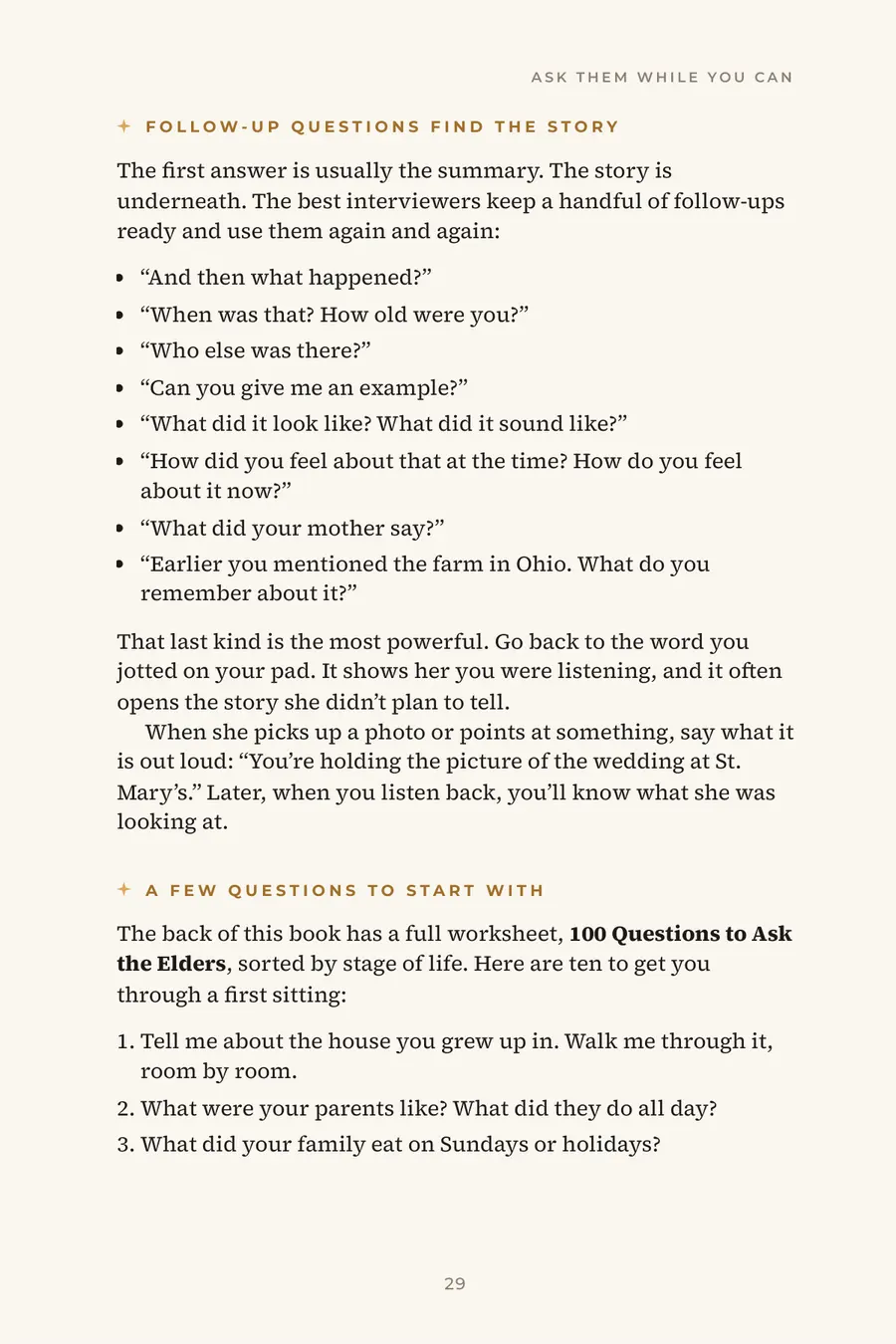
Interviewing parents, aunts and uncles: how to ask so they open up, follow-up questions, memory loss, and the questions people regret not asking.
Recording voices and faces with the phone you already have: sound, light, consent, keeping the files safe, and short clips the grandchildren will play.
Rescuing photos, slides and negatives: sorting, scanning at home or with a service, naming files, writing who and where and when before nobody knows.
Letters, certificates, military and immigration papers, and finding the family in free US records (FamilySearch, the census, the National Archives), with care about DNA surprises.
Collecting the recipes and the stories at the table with them, testing grandma's "pinch of this", and making a cookbook the family will use.
Passing stories on to children near and far: story rituals, letters, video calls, the stories children love most at each age.
Heirlooms: recording the story behind each piece, the heirloom list, and talking about wishes early so things bring the family together (general information; wills go to an attorney).
Turning it all into something: a family storybook, a slideshow, a ten-minute family documentary, a shared online archive, printing and sharing copies.
A family gathering built around the stories: the photo wall, story night, recording the elders, and keeping it going every year.
The painful parts of a family's story (estrangement, divorce, addiction, a death no one talks about, a blended family): what to tell, how to tell it kindly, what to leave out, and when to talk to a counselor first.
The legacy letter (an "ethical will"): what you learned, what you hope for them, and what you want them to know you felt.
11 printable pages: The Family Story Plan; 100 Questions to Ask the Elders; 52 Weeks of Story Prompts; The Interview Checklist; The Photo & Paper Rescue Checklist; The Photo Label Sheet; The Recipe Card; The Heirloom List; The Story Reunion Checklist; The Legacy Letter Outline; Where to Find Help and Records (US).
Tap a page to see it large.
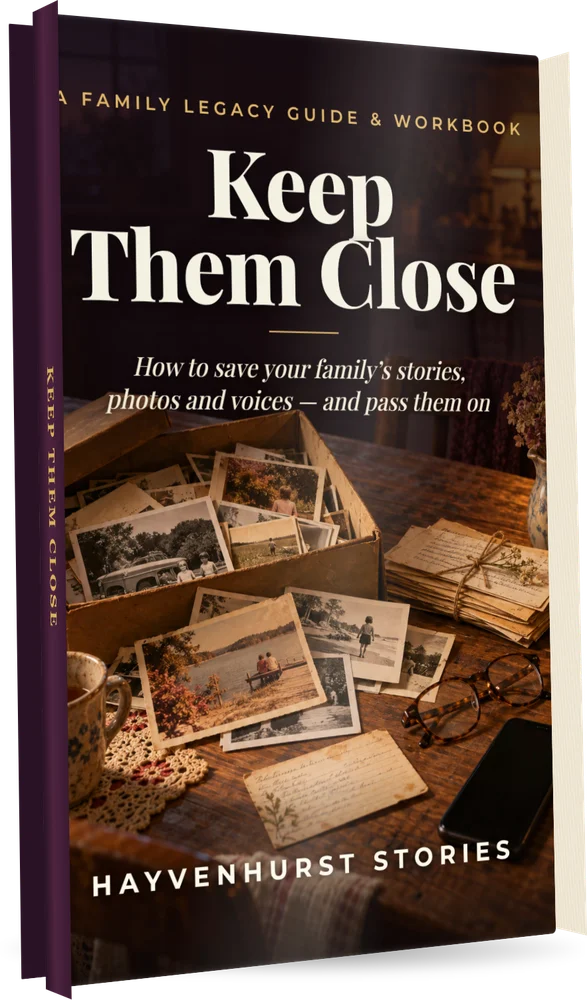
Keep Them Close: a 181-page designed PDF, about 35,000 words, in 13 chapters.
11 worksheets to print, as many copies as you like: 100 questions for the elders, 52 weeks of story prompts, the photo label sheet, the recipe card, the heirloom list, the legacy letter outline and more.
Delivered by Gumroad straight away: a download link on screen and by email.
Reads anywhere: phone, tablet or computer, or send it to your Kindle.
A PDF, designed as a 6 × 9 inch book. It opens on any phone, tablet or computer, and the worksheets print on ordinary paper at home. It is a digital book; nothing is shipped.
181 pages: 13 chapters of about eight pages each, a one-page guide to where to start, the 11 worksheets and the sources.
No. The book assumes a phone and, for photos, a scanner app or an inexpensive flatbed. Where a paid service helps (scanning, printing a family book), it explains what it does and roughly what it costs, as checked in 2026.
The videos tell the story of a family that kept its stories alive. This book helps you do the same for yours: what to ask, how to record it and keep it safe, and how to hand it on.
Yes. Buy it, print it at home or at a print shop, and give her the pages, worksheets and all. You may print the worksheets as often as your family needs.
Yes. The research and guidance it uses (from the Library of Congress, the National Archives, FamilySearch and published studies) are listed with their sources at the back. The examples in the chapters are composites, not real people.
Click a buy button and pay in Gumroad’s secure checkout, which opens on this page. The download link appears at once and arrives by email.
The stories, photos and voices of your family, kept and passed on.
$19Get the book — $19